For multinational companies expanding in Vietnam, workplace decisions are increasingly connected to broader environmental, social and governance (ESG) strategies. The office is no longer evaluated only by rent, location, floor area or amenities. Companies are also looking at building performance, employee wellbeing, commuting patterns, resource efficiency and the quality of the workplace environment.
This is particularly relevant as businesses work to understand and manage Scope 3 emissions, which cover indirect emissions across a company’s value chain. The GHG Protocol identifies categories including employee commuting, business travel, waste generated in operations, and upstream leased assets.
For companies looking for a LEED Gold coworking HCMC solution, the combination of green building standards and workplace-focused wellness frameworks can provide a more structured approach to evaluating a flexible office.
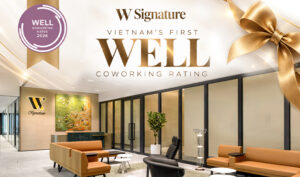
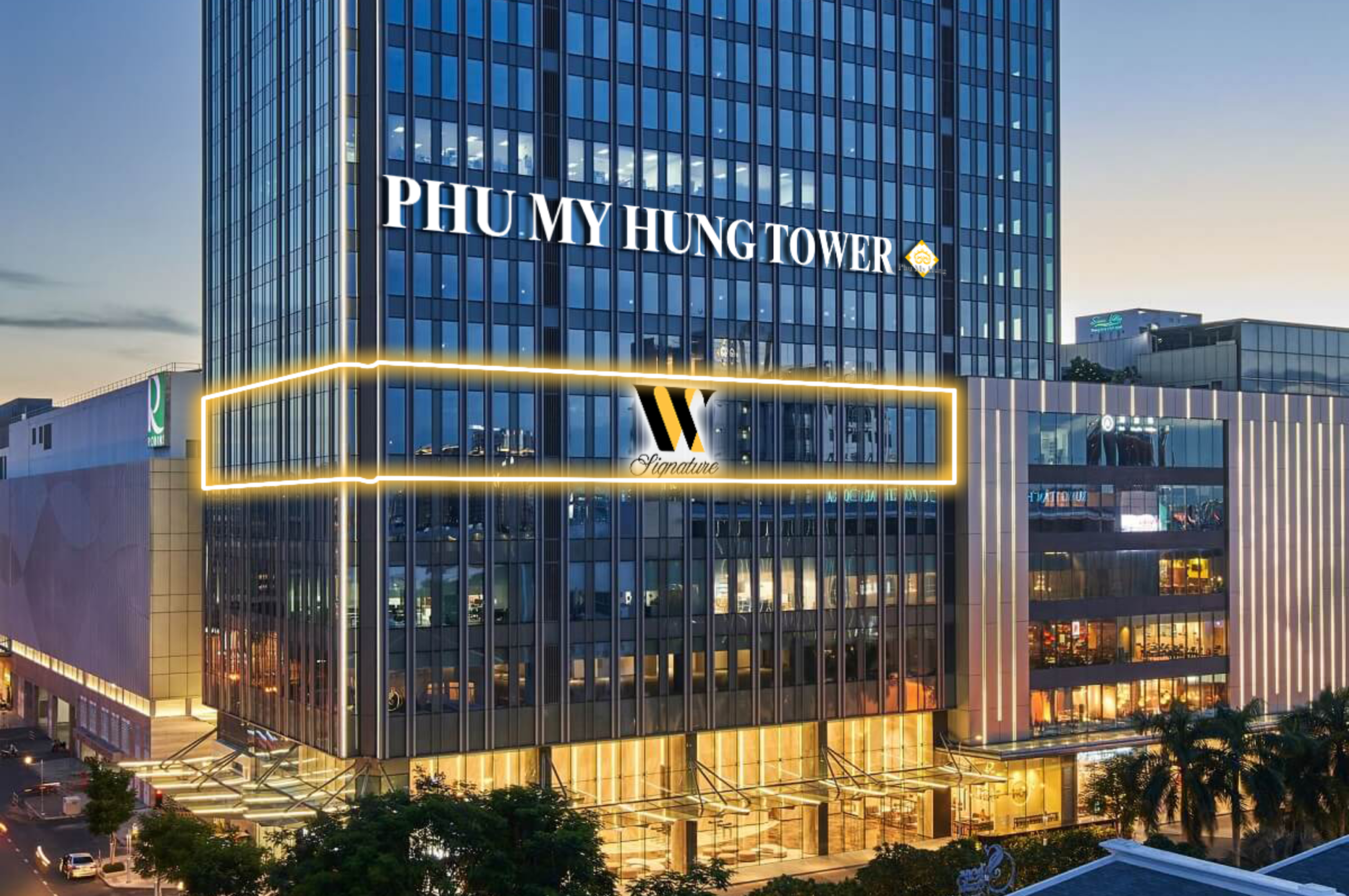
W Signature in Phu My Hung offers an example of this approach. Located within a LEED Gold building, W Signature has achieved the WELL Coworking Rating and combines private offices, executive suites, dedicated desks, meeting rooms and shared amenities in a premium workplace environment.
The key point, however, is that certifications should not be treated as an automatic guarantee of lower corporate emissions. Instead, they provide frameworks and measurable criteria that can support better building, operational and workplace decisions.
Why Scope 3 Is Becoming a Workplace Consideration
Corporate carbon accounting is becoming increasingly connected to decisions outside a company’s directly controlled operations.
Under the GHG Protocol framework, Scope 3 covers indirect emissions that occur throughout a company’s value chain. The framework includes 15 categories, ranging from purchased goods and services to business travel, employee commuting and leased assets.
For corporate real estate teams, several of these categories can intersect with workplace strategy.
Employee commuting, for example, is included under Scope 3 Category 7. The GHG Protocol defines this category as emissions associated with employees travelling between their homes and worksites. Upstream leased assets are another relevant category when emissions from leased assets fall outside a company’s Scope 1 and Scope 2 boundaries.
This means office selection can become part of a wider sustainability discussion.
The location of a workplace influences commuting patterns. The building influences energy and water performance. Workplace design influences how efficiently space is used. Shared infrastructure can affect the amount of physical resources required to operate a workplace.
None of these factors should be viewed in isolation. But together, they demonstrate why ESG workplace strategy is becoming more relevant to corporate real estate decisions.
Scope 3 Is Not Simply a Building Problem
It is important to make a distinction between a building’s sustainability performance and a company’s Scope 3 inventory.
A LEED certification does not automatically mean that a tenant has reduced its Scope 3 emissions. Similarly, choosing a WELL-rated workspace does not by itself create a specific carbon reduction.
Instead, certifications provide structured frameworks for evaluating aspects of the built environment.
The corporate responsibility remains to establish the relevant emissions boundaries, collect appropriate data and apply the methodology required by the company’s reporting framework.
For ESG teams, this makes the workplace an input into a larger sustainability strategy rather than a standalone solution.
What LEED Gold Means for Corporate Workplaces
LEED, developed by the U.S. Green Building Council (USGBC), is a widely recognised green building rating system covering areas such as energy, water, materials, indoor environmental quality and location. U.S. Green Building Council
The framework is designed to evaluate buildings holistically rather than focusing on a single sustainability feature.
This matters for companies because workplace performance is influenced by the wider building ecosystem.
Energy efficiency can influence operational consumption. Water efficiency can reduce resource use. Materials and waste strategies can affect the environmental impact of fit-outs and ongoing operations. Indoor environmental quality addresses factors including air quality, thermal comfort, visual quality and acoustic conditions. U.S. Green Building Council
LEED therefore gives corporate occupiers another layer of information when assessing a workplace.
LEED Gold and Corporate Real Estate Decisions
For an MNC evaluating office options in Ho Chi Minh City, a building certification can form part of the due diligence process.
Instead of assessing an office only on:
- Rental cost
- Floor area
- Location
- Parking
- Amenities
- Lease terms
corporate occupiers can also ask:
- What sustainability certification does the building hold?
- How does the building approach energy efficiency?
- Are energy and water consumption measured?
- What indoor environmental quality strategies are in place?
- How is waste managed?
- Does the building support the company’s ESG requirements?
- Can sustainability information be incorporated into corporate reporting?
A LEED Gold coworking HCMC workplace can therefore be relevant to companies looking for more than flexible space. It can become one component of a broader corporate real estate and sustainability framework.
How WELL Coworking Rating Extends the ESG Conversation
Environmental performance is only one part of workplace sustainability.
A workplace also affects the people who use it.
The WELL Building Standard and WELL Ratings focus on health and wellbeing in the built environment. For coworking environments specifically, the WELL Coworking Rating provides a framework designed around health and wellbeing considerations within flexible workplaces. IWBI describes the rating as a tool for advancing health and wellbeing in coworking environments as hybrid work and flexible workplace models evolve. WELL Resource Hub
This creates an important distinction between green buildings and healthy workplaces.
LEED primarily provides a framework for environmental and building performance considerations.
WELL places greater emphasis on the human experience of the built environment.
The two approaches can therefore complement each other.
Why Wellness Matters to ESG Strategy
The “S” in ESG is often less tangible than environmental metrics such as energy consumption or carbon emissions.
Workplace wellness provides one way for companies to translate social sustainability into physical workplace decisions.
Factors such as air, water, lighting, thermal comfort, movement, nourishment and the overall workplace experience can influence how employees interact with their environment.
For companies with hybrid teams, regional offices or project-based teams, flexible workspace can also provide a way to scale workplace capacity without committing immediately to a large conventional office footprint.
The WELL Coworking Rating is particularly relevant in this context because it addresses the coworking environment rather than treating wellness as an afterthought.
5 Ways a LEED Gold Coworking HCMC Workplace Can Support ESG Goals
1. Supporting More Efficient Building Performance
One of the most direct connections between green building standards and environmental strategy is building performance.
LEED addresses energy, water and resource efficiency through specific prerequisites and credits. USGBC notes that LEED projects incorporate strategies intended to reduce energy use and improve efficiency, while water efficiency is addressed through requirements around indoor, outdoor and specialised water use.
For a corporate tenant, the advantage is not simply having a sustainability logo on the building.
The more important consideration is whether the building’s performance characteristics align with the company’s operational requirements.
A company establishing a regional office, project office or satellite team can therefore include building sustainability within its workplace selection criteria.
This can help ESG and corporate real estate teams move from a purely transactional office search toward a more comprehensive evaluation of workplace performance.
2. Addressing Employee Commuting Through Location Strategy
Location is frequently discussed in real estate from the perspective of accessibility, talent attraction and convenience.
It can also be relevant to sustainability.
Employee commuting is explicitly recognised as a Scope 3 category by the GHG Protocol. GHG Protocol
That means the location of a workplace can become relevant when a company assesses its wider value-chain emissions.
This does not mean that moving to a particular office automatically reduces emissions. Employee travel behaviour depends on residential distribution, transport modes, working patterns and many other factors.
However, companies can consider accessibility as part of their workplace strategy.
A location close to retail, dining, residential areas and public transport can potentially make different commuting options more practical for employees.
For flexible offices, this becomes particularly relevant because companies may have employees visiting the workplace on different schedules rather than commuting to a fixed desk every day.
3. Combining Environmental Performance With Employee Wellbeing
A workplace can be environmentally efficient while still providing a poor employee experience.
Conversely, a comfortable workplace does not automatically have strong environmental performance.
This is where the combination of LEED and WELL becomes relevant.
LEED addresses environmental and building-performance considerations, including energy, water, materials and indoor environmental quality. U.S. Green Building Council
WELL focuses on health and wellbeing within the built environment.
Together, these frameworks encourage companies to consider both sides of the workplace equation:
How efficiently does the workplace operate?
and
How effectively does the workplace support the people using it?
For MNCs, this combined perspective can support a more comprehensive workplace brief.
Instead of asking only whether an office is “green”, companies can assess whether the workplace aligns with their environmental, social and operational requirements.
4. Making Flexible Space Part of a More Efficient Workplace Strategy
Corporate office demand is becoming more variable.
A company entering a new market may initially require a small team. A regional business may need temporary project space. A multinational may need additional capacity during a recruitment or expansion cycle.
Traditional long-term leases can make these changes difficult to accommodate.
Flexible workspace provides another model.
Private offices, dedicated desks, meeting rooms and shared facilities allow companies to access workplace infrastructure without necessarily building and operating every component themselves.
W Business Center, for example, provides private offices, dedicated desks, hot desks, virtual offices, meeting rooms and event spaces across its locations.
From an ESG perspective, flexible space should not automatically be considered more sustainable. The environmental impact depends on factors such as occupancy, building performance, operational practices and how companies use the space.
However, a well-designed flexible workplace can give businesses more options to align physical workspace with changing workforce requirements.
This is especially relevant for companies trying to avoid maintaining large amounts of underutilised office space.
5. Creating a Stronger ESG Narrative for Workplace Decisions
ESG strategy is not only about reducing emissions.
It is also about establishing clear policies and demonstrating that corporate decisions align with stated sustainability principles.
For MNCs, workplace selection can therefore become part of a broader ESG procurement and corporate real estate process.
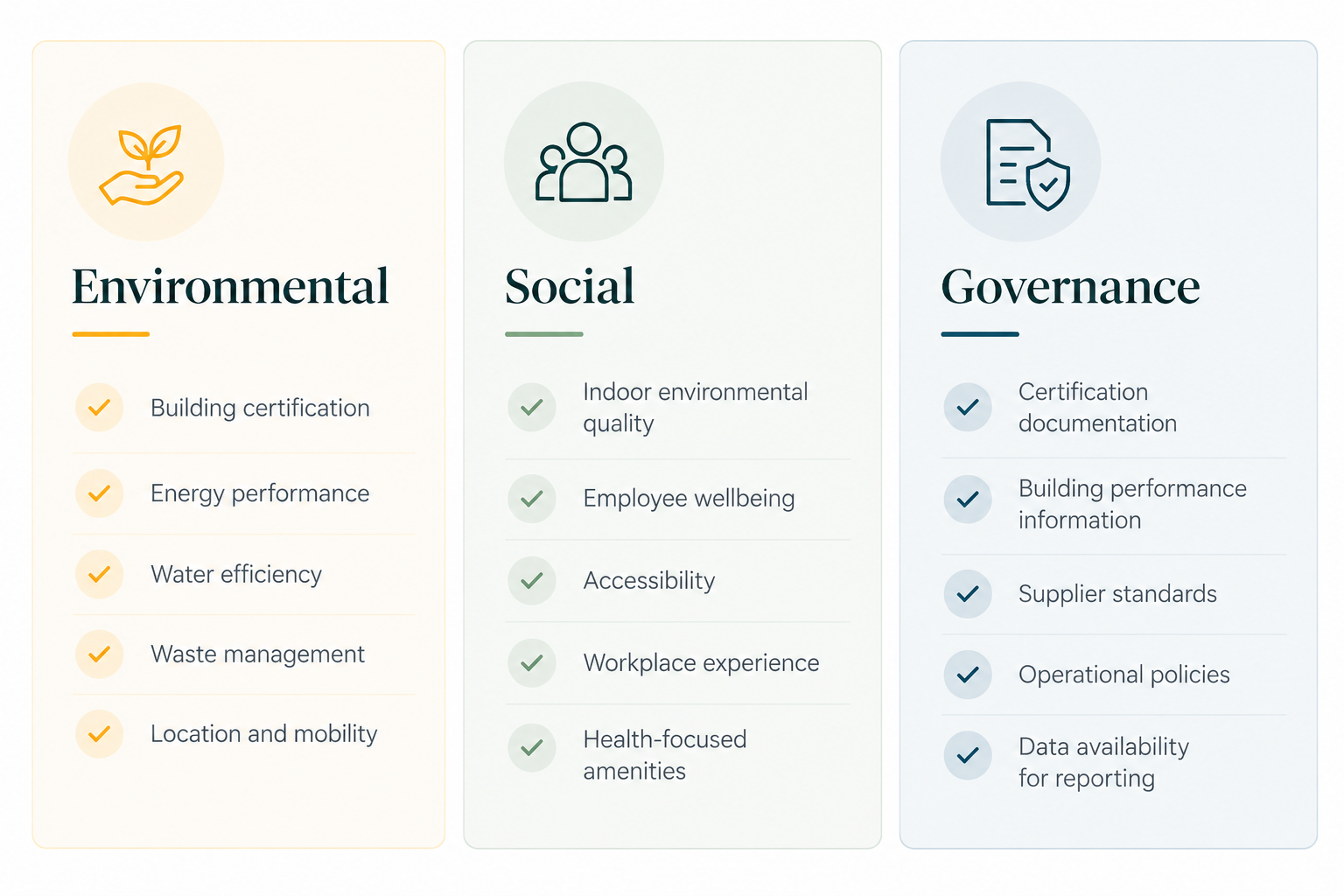
A company might evaluate:
Why Location Matters to Scope 3 and Workplace Strategy
Phu My Hung presents an interesting context for companies considering workplace location in Ho Chi Minh City.
The area has developed into an established business and mixed-use district, with office, residential, retail, dining and lifestyle destinations located within the broader neighbourhood.
For a flexible workplace, this wider ecosystem matters.
Employees do not experience an office as an isolated floorplate. Their workplace experience includes the journey to work, lunch and meeting options, after-work activities and the surrounding environment.
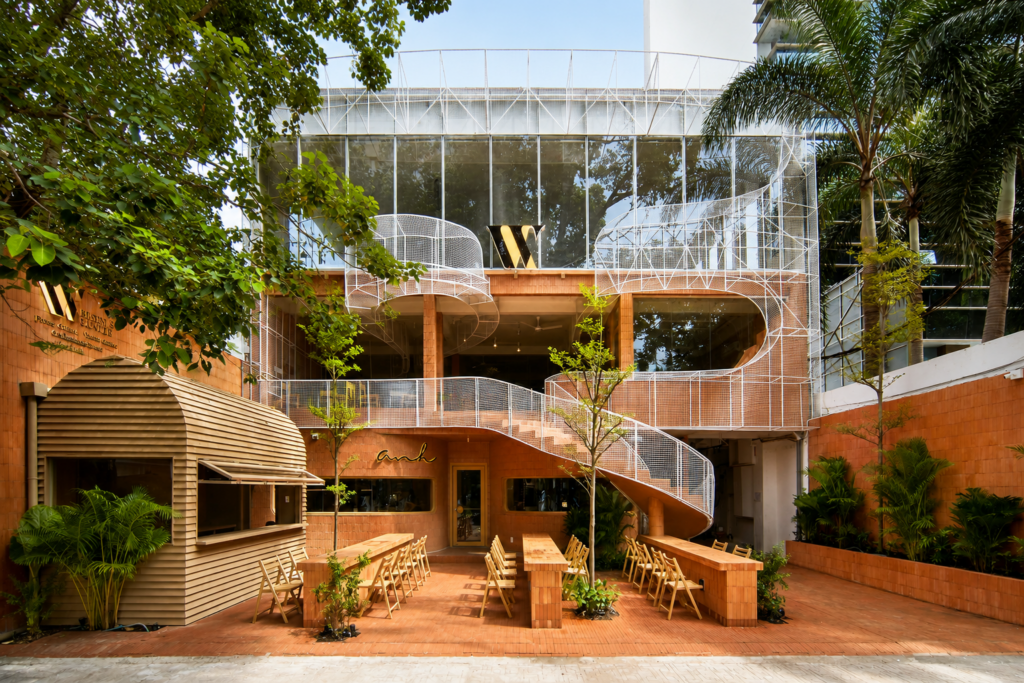
W Signature is located on the fifth floor of Phu My Hung Tower at 8 Hoang Van Thai, placing the workplace within the Phu My Hung business and lifestyle ecosystem. W Business Center identifies access to Crescent Mall and surrounding business, retail, dining and lifestyle destinations among the location’s advantages.
For companies evaluating workplace sustainability, location should therefore be assessed alongside building performance and workplace design.
It is one part of a broader workplace strategy.
W Signature: A Sustainable Workplace in Phu My Hung
W Signature represents W Business Center’s premium serviced-office concept in Phu My Hung.
The workplace combines private offices, executive suites, dedicated desks, hot desks, meeting rooms, event spaces and virtual office services.
The building is LEED Gold certified, while W Signature has achieved the WELL Coworking Rating. These two credentials address different dimensions of workplace performance and can therefore provide complementary reference points for businesses evaluating the space.
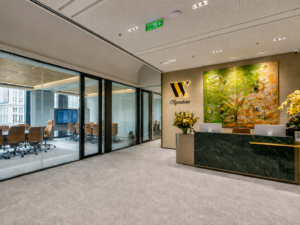
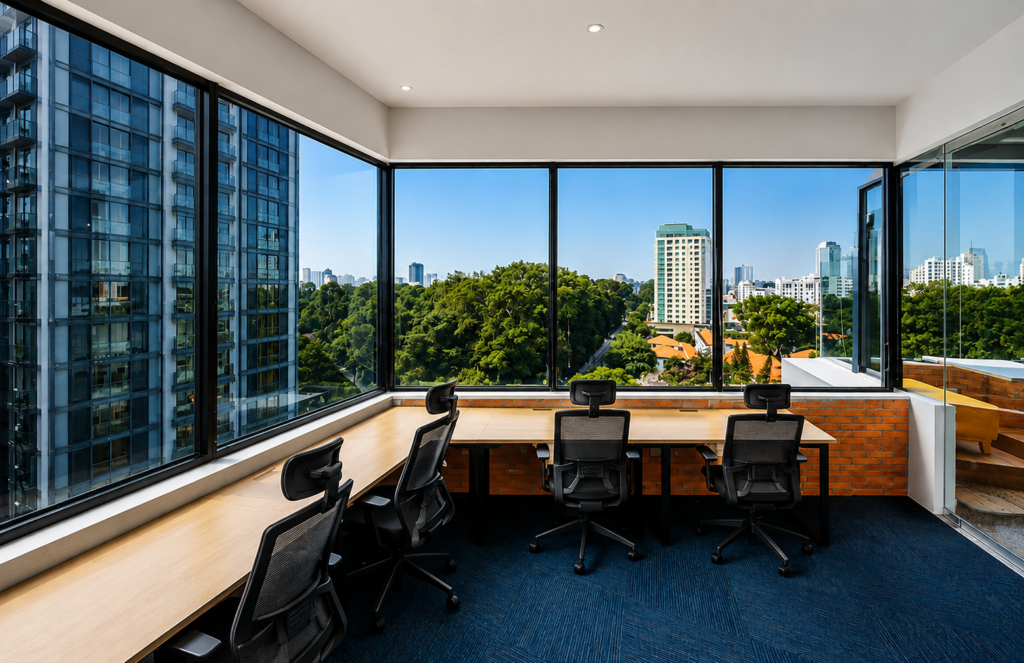
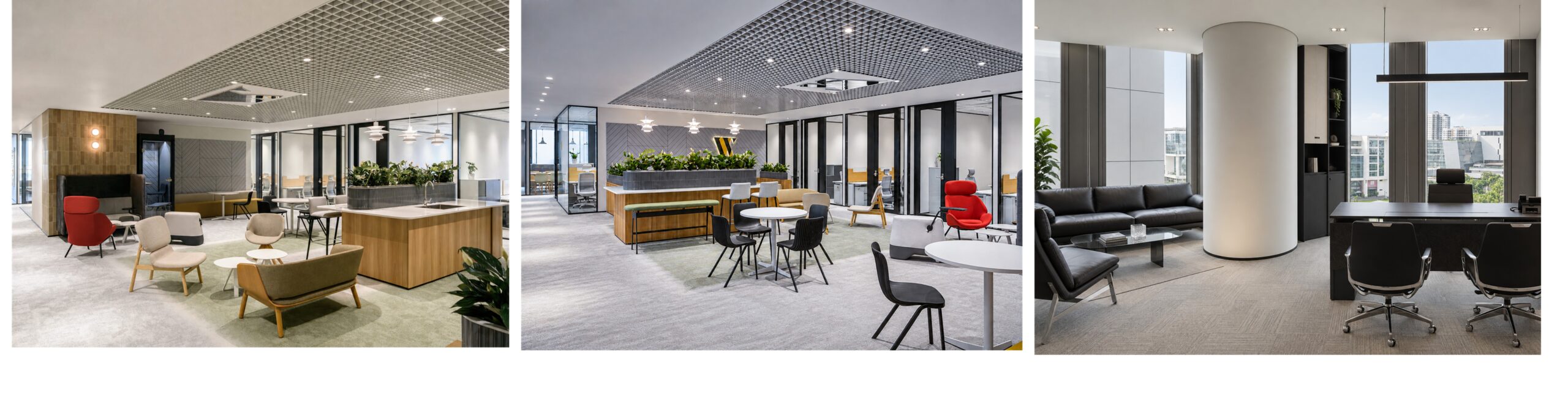
The workplace has also been designed around a range of employee and business requirements, including executive lounges, focus rooms, a nursing room, dedicated pantry, reception services, high-speed Wi-Fi, smart access and 24/7 security.
For companies, this creates an alternative to building a conventional office environment entirely from scratch.
A team can access a ready-to-use workplace while retaining flexibility around the size and type of workspace required.
A Workplace Designed Around Different Business Needs
The workplace requirements of a startup team are different from those of a regional MNC.
Some teams require private offices and executive rooms. Others need project-based desks, meeting rooms or temporary workspace.
W Signature’s workplace ecosystem is structured around this range of requirements, with private offices and executive suites available alongside shared workspace and meeting facilities.
This flexibility can be particularly relevant to companies entering or expanding within Ho Chi Minh City.
Rather than treating workplace strategy as a fixed real estate commitment, businesses can consider workspace as an operating platform that evolves alongside their organisation.
What ESG Teams Should Evaluate Before Choosing a Flexible Office
Certification is useful, but it should not be the only criterion.
When evaluating a WELL certified office Vietnam option or a LEED Gold coworking HCMC workplace, ESG and corporate real estate teams should consider the wider operational context.
1. Building Certification
Start by verifying exactly what has been certified.
Is the certification attached to the building, the interior fit-out, the operator or another component?
This distinction matters because different certification scopes address different aspects of the workplace.
2. Energy and Resource Performance
Ask how energy and water performance are measured and managed.
Where possible, request information on operational practices rather than relying solely on certification labels.
3. Indoor Environmental Quality
Evaluate air quality, lighting, thermal comfort, acoustics and other factors affecting the workplace environment.
USGBC’s LEED framework specifically recognises indoor environmental quality as an important component of green building performance.
4. Employee Experience
A workplace sustainability strategy should also consider people.
Look at wellness facilities, workplace ergonomics, focus areas, collaboration spaces, accessibility and amenities that support different working styles.
5. Location and Mobility
Assess where employees live, how they travel and what transport options are realistically available.
For Scope 3 purposes, employee commuting is a recognised emissions category, but actual impact depends on employee behaviour and the company’s reporting methodology.
6. Flexibility
Consider whether the workplace can accommodate changes in headcount.
A flexible workspace may be particularly relevant for project teams, market-entry teams and businesses with uncertain growth trajectories.
7. Reporting and Documentation
Finally, ask what information the workplace provider and building management can make available.
ESG teams increasingly need evidence rather than marketing claims.
Certification documents, operational data, policies and other supporting documentation can make workplace evaluation more robust.
From Green Building to Better Workplace Decisions
The relationship between workplace strategy and corporate sustainability is becoming more sophisticated.
A green building certification does not automatically reduce a company’s Scope 3 emissions. A WELL rating does not replace corporate carbon accounting. And a flexible office is not inherently more sustainable than a conventional lease.
The value comes from how these elements are combined.
For ESG teams, the workplace can be considered as part of a wider system that includes building performance, employee mobility, workplace utilisation, employee wellbeing and corporate reporting.
For corporate real estate teams, this creates an opportunity to expand the traditional office selection process.
Instead of asking only:
“Does this office meet our space requirements?”companies can also ask:
“Does this workplace support the environmental, social and operational objectives of our organisation?”
That shift is particularly relevant for multinational companies establishing or expanding operations in Ho Chi Minh City.
A LEED Gold coworking HCMC environment such as W Signature provides one example of how recognised green building credentials, workplace wellness and flexible workspace can come together in a corporate setting.
Located in Phu My Hung and operating within a LEED Gold building, W Signature combines the WELL Coworking Rating with premium serviced offices and flexible workplace solutions designed for modern businesses.
For organisations developing an ESG-conscious workplace strategy in Vietnam, the next step is not simply choosing the building with the most sustainability credentials.
It is understanding how the building, location, workplace model and operational practices collectively fit into the company’s broader sustainability objectives.
Explore W Signature in Phu My Hung and discover a workplace designed around sustainability, wellbeing and business flexibility.